Why a Certified and Properly Licensed Roofing Contractor Matters in Georgia
A roof usually gets attention at the worst possible moment. A stain spreads across the ceiling after a hard rain. Shingles show up in the yard after a storm. Water starts finding its way around a vent, a chimney, or a valley where two roof slopes meet. At that point, most homeowners are not thinking about licensing rules, permit requirements, or insurance documentation. They just want the leak stopped.
That urgency is exactly why the choice of roofing contractor matters so much in Georgia.
When a contractor is certified in the ways that actually matter for the work being done, properly licensed where state rules require it, and prepared to deal with permits, codes, and insurance, the job tends to move in a cleaner, safer direction. When those pieces are missing, even a simple roof repair can turn into a chain of avoidable problems. The leak may come back. The permit may be overlooked. Insurance paperwork may be incomplete. Damage that should have been documented early may become harder to prove later.
Georgia is not casual about contractor licensing. The state says residential and commercial general contractor services performed for compensation require state licensure, and it recognizes license categories for residential-basic, residential-light commercial, and general contracting work. That alone should tell homeowners something important. Roofing is not just a ladder-and-shingles trade. Once work crosses into broader contracting responsibilities, the state expects a certain level of experience, competency, and accountability.
The Georgia piece is not just paperwork
Many people hear “licensed contractor” and think of it as a bureaucratic box to check. In practice, it is more than that.
Georgia’s contractor rules include requirements tied to age, experience, competency, and examination. For commercial general contracting, the knowledge base reaches into building codes, estimating, insurance, surety bonding, and liens. Those are not abstract topics. They affect how a roofing contractor plans work, prices it, documents it, and carries responsibility if something goes wrong.
A roof leak repair can look simple from the driveway. A few missing shingles, maybe some lifted flashing, maybe staining around a ceiling vent. But once a contractor starts tracing how water actually entered the building, the job can become more technical than expected. Water rarely drips straight down from the point where it got in. It can travel along decking, framing, or underlayment before it shows itself. If the person diagnosing the problem does not understand roof system details, the visible symptom may get patched while the true entry point stays open.
That is where licensing and real qualifications start to matter. A properly licensed roofing contractor working within Georgia’s rules should understand that roof work is not only about the outer covering. It often involves water-shedding details, code issues, permit questions, and coordination with insurers or local building departments.
Storm country makes roof decisions harder
Georgia homeowners do not need a lecture on weather. Severe storms, wind, hail, and heavy rain are part of life here. Research from the Insurance Institute for Business & Home Safety has long emphasized that wind and hail commonly damage roofs and can lead to water intrusion. Hail can damage roof coverings and shorten roof life, even when the damage is not dramatic from ground level.
That matters because storm damage is one of the easiest situations for bad decisions to slip in. After a major weather event, people are under pressure. They are worried about active leaks, soaked insulation, damaged drywall, and what the insurance company will say. In that environment, rushed promises can sound very appealing.
Georgia’s insurance regulator advises homeowners to photograph damage, notify the insurer immediately, tarp a damaged roof if it is safe to do so, and avoid signing with rushed or unsolicited contractors. That advice is practical, not paranoid. In real roof repair situations, the first contractor who knocks on the door is not automatically the best one to trust with your house.
A qualified roofing contractor should be able to slow the situation down just enough to protect you. That means helping document the visible damage, giving a grounded assessment of what is known and what still needs inspection, and handling temporary protection measures safely if the roof is open to weather. It also means not pushing you into commitments before the basics are clear.
Roof leaks are often about the details people never see
When homeowners think about roofing, they usually picture shingles or panels. Experienced contractors tend to focus just as much on the details around them, especially flashing.
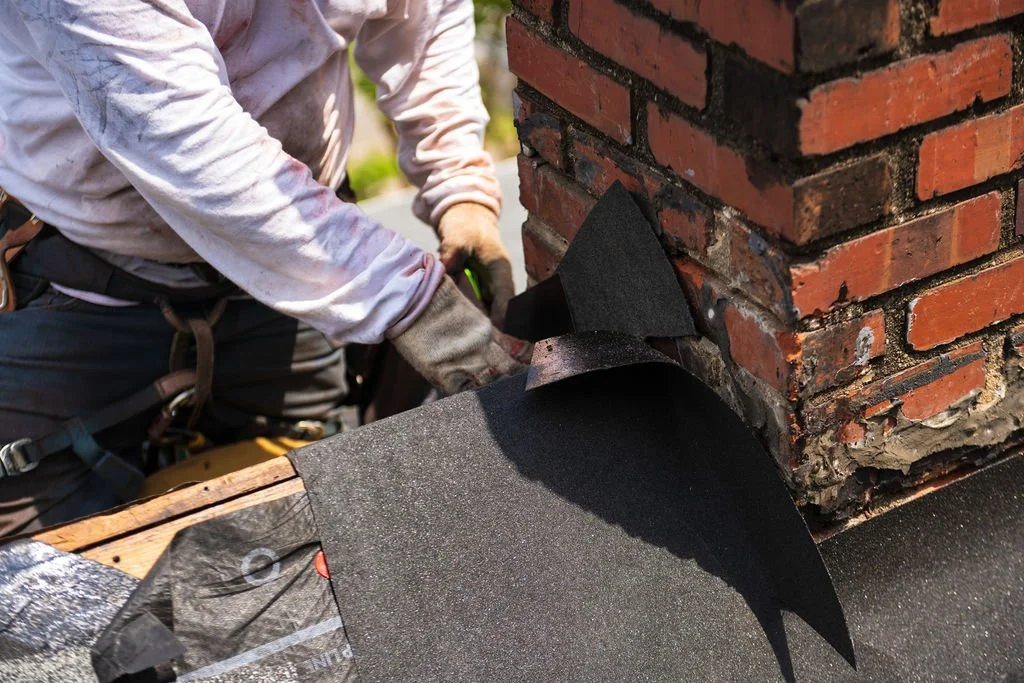
IBHS guidance points out that flashing and valley flashing are key water-shedding components, and that poorly installed or loosened flashing can allow water infiltration. Valleys are common leak points because they concentrate runoff. FEMA guidance also stresses that flashing must be integrated correctly with shingles and underlayment to prevent water entry.
That one point separates a thoughtful roofer from a shortcut roofer.
Anyone can smear sealant around a suspicious area and call it a repair. Sometimes that buys time. Sometimes it does almost nothing. A proper roof leak repair usually starts with identifying how water is being directed, where it is concentrating, and whether the roof’s water-shedding components are still doing their job. If flashing has lifted, if a valley detail was poorly installed, or if wind has compromised how components overlap, the repair has to restore the system, not just cover the symptom.
This is why homeowners often feel confused after getting two very different diagnoses. One contractor says the problem is minor. Another says a larger section needs to be opened up and rebuilt. The difference is not always salesmanship. Sometimes it reflects whether the contractor is evaluating the roof as a complete assembly or just reacting to what is visible from the surface.
Permits and code compliance matter more than most people think
Roof work is often treated as though it happens outside the normal building process. In reality, permit and code issues can become very important, especially when the scope grows beyond a small patch.
Marietta states that building permits are required for new construction, temporary buildings, and certain alterations to existing construction. Marietta and Cobb County also enforce current Georgia building codes. That means roof-related work may involve local compliance questions, and the contractor handling the job needs to know when those questions apply.
A homeowner should not have to become an expert in municipal permitting during a roof emergency. A contractor who routinely works in Georgia should be prepared to navigate that side of the job. In the Marietta area in particular, that means roof repair contractor understanding permit compliance, storm-damage assessment, leak tracing, and the difference between residential and commercial work under Georgia licensing rules.
This is one of those areas where a properly licensed roofing contractor earns their keep quietly. You may never see the forms, the permit conversations, or the code references. You may only notice that the work proceeds without confusion, avoidable delays, or awkward explanations later. But those background responsibilities are part of what separates a professional operation from a truck-and-ladder outfit that only knows how to replace visible material.
Insurance and licensure are connected in Georgia
Another point that gets overlooked is insurance. In Georgia, insurance is a condition of applying for and maintaining contractor licensure. That matters because homeowners often assume every contractor on the market carries the right coverage and keeps it current. That assumption can get expensive.
When a contractor is working on your roof, several forms of risk are in play at once. There is the obvious risk of accidental property damage. There is also the risk of incomplete or disputed work, the risk of code-related problems, and the risk that a storm-loss claim becomes more complicated because the repair process was handled poorly from the start.
The state’s licensing framework does not guarantee perfection, but it does tell you the contractor is operating within a structure that takes insurance seriously. That is a much stronger position than hiring someone whose business setup is unclear and whose responsibilities may become blurry the minute a problem surfaces.
For commercial jobs, the expectations are even broader. Georgia’s commercial contractor rules include knowledge areas like estimating, surety bonding, and liens. Those subjects matter because commercial roofing projects carry bigger contractual and financial consequences. A mistake on a commercial roof can affect tenants, operations, interior equipment, and timelines in ways that make a residential leak look simple.
The cheapest roof repair can become the most expensive
Price matters. Nobody should pretend otherwise. Roof work can be expensive, and homeowners are right to compare estimates. Still, roofing is one of those trades where a low price can hide a very high eventual cost.
A poorly handled roof repair may not fail immediately. That is part of the danger. If the visible leak stops for a few weeks, the homeowner may think the issue is resolved. Then the next driving rain exposes the same weak point again, or a different interior stain appears a few feet away. At that stage, the contractor who did the original patch may blame a “new leak,” when in reality the first diagnosis never addressed the system correctly.
The technical trouble spots are often predictable. Valleys, flashing transitions, penetrations, and water-shedding laps are common offenders. If those details are not inspected and repaired with care, you are not really buying a solution. You are renting a pause.
That is why experience and licensing work together. Experience helps a contractor recognize patterns in roof failures. Licensing supports a framework of accountability. Together, they make it more likely that the person on your roof is not improvising at your expense.
What a homeowner should ask before hiring
The smartest hiring conversations are usually simple. You do not need to interrogate someone like a lawyer. You just need enough clarity to know whether they are equipped for the work and operating within Georgia’s rules.
Here is a short practical checklist:
- Ask what license category applies to the work being proposed under Georgia rules.
- Ask whether permits may be required for the scope of work, and who will handle that process.
- Ask how the contractor plans to diagnose the source of the leak, not just patch the symptom.
- Ask whether they carry the insurance required to maintain licensure.
- Ask how storm damage will be documented for insurance purposes if the roof was hit by severe weather.
Those questions do two useful things. First, they surface whether the contractor actually understands the Georgia side of the job. Second, they reveal how the company communicates under pressure. A capable roofing contractor does not need to dance around basic compliance questions.
Why “certified” should mean more than a sales word
Homeowners hear the word “certified” all the time in home services, and not always in a meaningful way. The term gets used loosely in marketing. What matters is whether the contractor’s credentials connect to something real: state licensure where required, active insurance, knowledge of codes and permit processes, and proven ability to assess and repair roof systems properly.
That distinction matters because roofing combines visible craftsmanship with hidden technical responsibility. The shingles may look straight and clean from the yard, but the real test is whether the whole assembly sheds water the way it should. A contractor who understands flashing integration, underlayment relationships, runoff concentration in valleys, and the way storms damage roof coverings is bringing value that goes beyond surface appearance.
In Georgia, where the licensing framework specifically addresses competency and examination, homeowners should take those signals seriously. They are not just buying labor. They are hiring judgment.
After a storm, the first few hours matter
When a roof has been hit by severe weather, people often lose time deciding what to do first. There is a sensible order to it, and Georgia’s insurance regulator offers useful guidance.
If your home has storm damage, focus on these immediate steps:
- Photograph the damage as clearly as you can.
- Notify your insurer right away.
- Tarp the damaged area if it is safe to do so.
- Avoid signing with contractors who rush you or appear unsolicited.
- Bring in a qualified roofing contractor to assess the roof and trace potential leak paths.
That last step is especially important when damage is not obvious from the ground. Hail, for example, can shorten roof life and damage the roof covering in ways that are easy to miss without a closer assessment. Wind can loosen or disturb materials in a way that does not create an immediate opening, but sets the stage for later water intrusion.
A good contractor will also understand that interior symptoms matter. FEMA notes that ceiling and roof damage from disaster-caused leaks may be eligible for assistance, with verification typically done by on-site inspection. That does not mean every leak leads to aid, but it does mean documentation and timing can matter.
Residential and commercial jobs are not interchangeable
Some homeowners assume that a company that handles houses automatically understands commercial roofing, or vice versa. Georgia’s licensing structure is a reminder that these categories are not all the same.
The state recognizes residential-basic, residential-light commercial, and general contracting licenses. It also has a commercial general contractor limited tier option tied to a financial cap. That tells you the state sees meaningful differences in project type and scope.
Why does that matter for roofing? Because the demands change quickly when you move from a single-family home to a larger residential property or a commercial building. The roof area may be bigger, the penetrations more numerous, the coordination with occupants more sensitive, and the financial stakes much higher. Permit issues, code knowledge, insurance documentation, and contractual obligations all become heavier.
For a homeowner or property manager, the practical takeaway is simple. Match the contractor to the actual scope of the work. A roof repair on a house, a storm-damage claim on a mixed-use building, and a larger commercial reroof are not interchangeable assignments.
Leak tracing is a skill, not a guess
One of the clearest signs of a seasoned roofing contractor is how they talk about leak tracing. Less experienced crews often treat leak location as obvious. It rarely is.
Water follows gravity, but not always in the way people expect. It can enter high on the roof and show up much lower indoors. It can move laterally before dropping through insulation or a seam. Valleys concentrate runoff. Flashing details at walls or penetrations can fail quietly. Underlayment and shingle integration matter. A contractor who jumps straight to the nearest visible stain may repair the wrong spot.
This is another reason licensed, qualified professionals matter in Georgia. The state’s contractor requirements are built around competency for a reason. Diagnosing building problems takes more than a hammer and a bundle of shingles. It takes technical judgment.
When someone has that judgment, they tend to ask better questions. Was the leak associated with wind-driven rain or a long soaking rain? Did it begin after hail? Is the staining near a valley, a wall intersection, or a roof penetration? Has there been earlier patching in the same area? These are not dramatic questions, but they often lead to a better repair.
What professionalism looks like on a Georgia roof job
Professionalism in roofing is often quiet. It is less about polished slogans and more about steady competence.
It looks like a contractor who understands whether the job falls under residential or commercial licensing requirements. It looks like someone who knows that local permit compliance may matter in places like Marietta and Cobb County. It looks like an assessment that considers wind, hail, water intrusion, flashing, valleys, and the path water may have traveled before it became visible indoors.
It also looks like restraint. A trustworthy contractor does not promise what cannot be known yet. If roof damage needs closer inspection, they say so. If a temporary tarp is the safe first move before a fuller repair, they say that too. If the insurer needs prompt notice and documentation, they do not tell the homeowner to wait.
That kind of professionalism can feel less flashy than a hard sales pitch. It is usually far more useful.
The real value is peace of mind you can defend
Most homeowners will never become experts in contractor licensing, building code administration, or storm-loss documentation. They should not have to. What they do need is a roofing contractor whose qualifications hold up when the job gets complicated.
In Georgia, that means paying attention to licensure where state rules require it. It means recognizing that insurance is part of maintaining that licensure. It means respecting permit and code requirements where local jurisdictions enforce them. And it means hiring someone who understands that roof repair and roof leak repair are system problems, not just surface problems.
A roof is easy to ignore when it is doing its job. When it stops doing its job, the person you hire next matters more than the brand of shingle in the truck.
The best time to care about licensing, insurance, code knowledge, and leak-tracing skill is before the contract is signed, before the patch is nailed down, and before the next storm tests the work. That is why a certified and properly licensed roofing contractor matters in Georgia. Not because the paperwork is impressive, but because the stakes over your head are real.